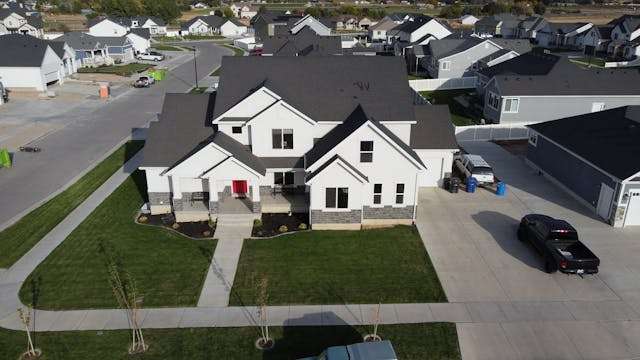
Storm season exposes the gap between roofs that look fine from the ground and roofs that have taken real damage. Hail strikes leave marks the homeowner cannot see. Wind damage lifts shingles enough to compromise the waterproofing but not enough to be visible without a ladder. By the time a leak shows up inside the house, the insurance claim window may already be closing.
The inspection step matters more than most homeowners realize, and the contractor who does that inspection has a direct effect on whether the claim gets approved.
The first contractor on the property sets the tone
After any significant storm, neighborhoods fill with door-to-door roofing crews. Some of them are reputable. Many are not. The ones who showed up after the 2007 ice storm or the 2017 hail event and are still operating today are the ones to take seriously. The ones who arrived two days ago with out-of-state plates and a generic flyer are the ones to be careful with.
A storm-chaser contractor is paid to find damage whether it is there or not, because the insurance payout funds the project. That creates a financial incentive misaligned with the homeowner’s actual interest, which is an honest assessment of whether the roof needs work.
What a real inspection covers
A proper post-storm roof inspection takes 45 minutes to an hour, not 10. The contractor walks the roof, photographs hail strikes on shingles, vents, and metal flashing, and documents the pattern of damage. Granule loss, exposed asphalt mat, and fractured fiberglass mat are all signs of hail damage that an adjuster will recognize.
Wind damage shows up differently. Lifted shingles, creased shingles, and missing tabs all suggest wind exposure even when the surface looks intact. The contractor documents these with annotated photos that the homeowner can submit alongside the claim.
A real inspection also covers the attic side. Daylight visible through the deck, water staining on rafters, and damp insulation are all evidence that a leak is already developing.
Documentation is the leverage
Insurance adjusters are paid to minimize the payout. The homeowner who walks into the conversation with annotated photographs, a written estimate, and clear documentation of the damage pattern is in a much stronger position than the homeowner who calls the carrier first and hopes the adjuster sees what is there.
This is where the choice of contractor matters most. An experienced local roofing contractor knows what the adjuster needs to see and how to present it. A storm-chaser is usually working on volume and does not produce the same quality of documentation.
Watch for the AOB
An Assignment of Benefits is a contract clause that signs the homeowner’s insurance rights over to the contractor. Some states have moved to restrict these. Where they are still legal, they should be a flag. The homeowner gives up direct control of the claim, the contractor invoices the insurer directly, and any dispute becomes a fight between the carrier and the contractor while the roof sits half-finished.
A trustworthy contractor invoices the homeowner and lets the homeowner manage the claim, with documentation help along the way. The AOB shortcut is convenient for the contractor and risky for the homeowner.
Timing matters more than most homeowners think
Insurance policies typically require a claim to be filed within a year of the damage event, and some are stricter. Storm damage that goes uninspected for six months can become harder to attribute to a specific event, which gives the carrier room to deny.
If a major hail or wind event came through the area, the inspection should happen in the weeks following, not the months. The inspection itself is usually free, and the documentation is useful whether a claim ends up being filed or not.
The local choice is usually the safer one
Working with a contractor who has been in the same service area for decades means the same crew will still be there if a warranty issue surfaces in year three. Storm-chasers leave town when the work dries up. A long-standing local operation has a reputation to protect and a phone that still picks up next October.
For homeowners in the Tulsa Metro working through this after a storm, a family-owned Tulsa roofing contractor that has worked the same neighborhoods since 1978 offers free inspections and the kind of documentation that insurance adjusters take seriously, without the high-pressure tactics that make the storm-chaser problem worse.
A roof is one of the few parts of a house where rushing into a contract has long-tail consequences. Take the extra week to find the right contractor. The inspection is free and the documentation is worth it whether the claim gets filed or not.
