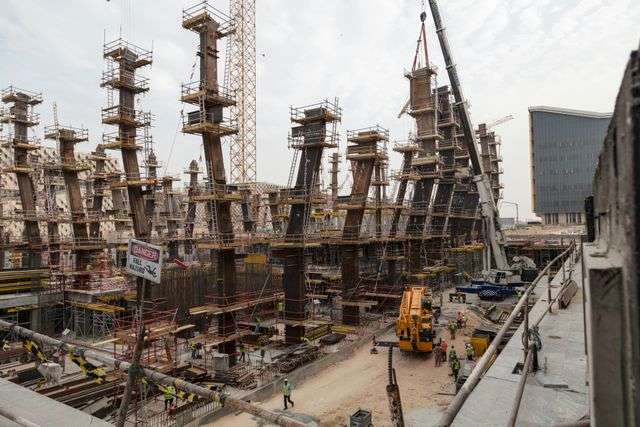
Construction and trade companies build wealth differently than office-based businesses. Income is project driven and seasonal. Cash flow swings with weather, materials prices, and the timing of receivables. The owner’s net worth is often concentrated in a combination of business equity, equipment, and real estate held under the business or related entities. Financial planning that ignores those dynamics produces advice that does not match the reality of running the company.
The standard playbook for small business owners assumes steady income and a clean separation between the operating business and the owner’s personal assets. Trade businesses rarely match that pattern. The planning needs to adapt to the actual rhythm of the business.
Smoothing irregular income
A general contractor might pull six figures from the business in a strong quarter and almost nothing in a slow one. A residential builder lives off draws that depend on closings. An electrician with a fleet bills steadily but spends heavily on parts and labor before invoices clear. The household budget cannot ride those swings without a buffer that bridges the gap.
Setting up a personal cash reserve sized to cover six to nine months of household expenses is the first step. The second is a discipline of paying the owner a steady salary from the business, with quarterly or annual distributions taken when the business performance supports them. That structure does two things. It stabilizes the household and it forces the business to plan its own cash flow around a predictable owner draw, which is healthier for the company than ad-hoc withdrawals.
Equipment, real estate, and the balance sheet
Trade businesses accumulate equipment. Trucks, lifts, generators, specialized tools, fleet vehicles. The balance sheet shows that equipment as an asset, and the owner often thinks of it as wealth. It is, but with two complications. Equipment depreciates faster than the books say. A truck or lift that shows a five-year life on the depreciation schedule may be worth half its book value in three. And equipment ties up working capital that could otherwise be deployed into retirement accounts or other appreciating assets.
Holding shop and yard real estate inside a separate LLC, then leasing it back to the operating company, is a common structure for trade owners. It separates the appreciating asset from the riskier operating company. It lets the real estate appreciate at its own pace. And it creates a predictable rental income stream that continues after the owner exits the operating business.
Retirement vehicles trade owners underuse
Many trade business owners default to a SEP-IRA because it is easy to set up. SEP-IRAs work, but they leave money on the table for owners with profitable businesses. A Solo 401(k) with profit sharing allows higher contributions and adds the option of after-tax Roth contributions. A defined benefit plan, layered on top of a 401(k), can shelter six figures of annual income for owners in their fifties and sixties who are catching up on retirement savings.
The right vehicle depends on the business structure, the number of employees, the owner’s age, and how much variability is acceptable in the annual contribution. Most trade owners would benefit from a review every two or three years to confirm the structure still matches the current state of the business.
Succession in family-run trades
Trade businesses are often passed to a son or daughter who has been working in the company for years. The transfer can be tax efficient if planned, or expensive if handled at the moment of the owner’s exit. Gifting shares over time using the annual exclusion. Selling on an installment basis to the next generation. Structuring a buy-sell agreement funded with life insurance. Each path has tradeoffs that depend on the family’s tax situation and the next generation’s ability to finance a buyout.
The cleanest transfers happen when the conversation starts five to ten years before the founder wants to step back. By the time the founder is ready to walk away, the structure is in place and the next generation has been operating in their new ownership role for several years.
For trade and construction business owners in Oklahoma navigating these decisions, working with Inspire’s financial planning team means the planning matches the way the business actually runs, not a template built for a different kind of company.
