There is an old saying in public health that your zip code is a better predictor of your life expectancy than your genetic code. It is a harsh reality. You can live ten miles away from a world-class hospital, but if you don’t have a car, reliable public transit, or the ability to take three hours off work during the middle of the day, that hospital might as well be on the moon.
For decades, the healthcare industry operated on a “build it and they will come” model. We built massive, centralized medical centers and expected the community to find a way to the front door. But for vulnerable populations—the elderly, the rural poor, and hourly workers—that model is broken.
This is why the most exciting innovation in medicine right now isn’t a new surgical robot or a pill; it is the mobile health clinic.
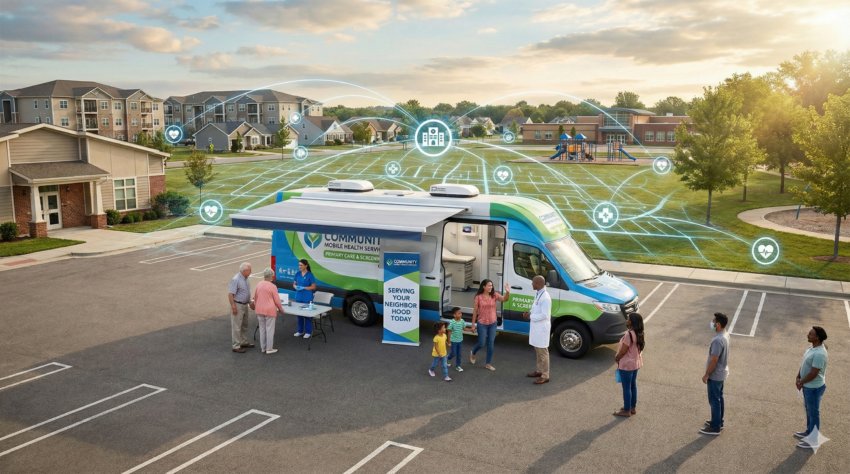
By putting exam rooms on tires, providers are flipping the script. They are acknowledging that access isn’t just about insurance cards; it is about logistics. Thanks to doctors joining their local professional medical society, healthcare continues to evolve, and mobile health units are out on the street, solving the problem in real-time, one parking lot at a time.
Here is how these roving medical units are quietly reshaping the health of local communities.
1. Eliminating the Time Tax on Health
For a salaried professional, a doctor’s appointment is a minor inconvenience. You block off your calendar, drive over, and maybe answer a few emails in the waiting room.
For an hourly worker, a doctor’s appointment is a financial calculation.
- Can I afford to lose four hours of wages?
- Can I find childcare for the afternoon?
- Is it worth taking two buses to get there?
When the friction is that high, people delay care. They skip the annual checkup. They ignore the nagging pain in their side. They wait until the condition is catastrophic and requires an emergency room visit.
Mobile health clinics remove this friction. When a dental van pulls up to a crowded elementary school, or a mammography unit parks outside a large factory during a shift change, the time tax vanishes. Patients can get screened and treated in twenty minutes and go right back to their lives. By integrating care into the daily flow of the community, these services catch problems when they are small, manageable, and cheap to fix.
2. The Psychology of the Parking Lot (Building Trust)
There is a phenomenon known as “White Coat Syndrome,” where a patient’s blood pressure spikes simply because they are anxious about being in a clinical setting. Hospitals can be intimidating. They are sterile, bureaucratic, and often culturally disconnected from the neighborhoods they serve. A mobile unit feels different. It feels local.
When a health van shows up consistently at the same church parking lot every Tuesday, it becomes part of the neighborhood fabric. The staff on board often become familiar faces. This lowers the psychological barrier to entry. A resident who might be suspicious of the healthcare system is much more likely to step into a friendly van parked next to their grocery store than to navigate the labyrinth of a university medical center.
This trust is critical for preventive care. It allows providers to have hard conversations about diet, addiction, or chronic disease management in a space where the patient feels safe and on their own turf.
3. Bringing Specialists to the Desert
Medical deserts are areas where the population is high, but the number of providers is low. In rural America, you might have to drive two hours to see a cardiologist or a psychiatrist.
Mobile health isn’t just about primary care anymore; it is becoming highly specialized.
- Mobile Stroke Units: These are ambulances equipped with CT scanners that can diagnose a stroke in the driveway and administer clot-busting drugs immediately, saving brain function that would be lost during the drive to the hospital.
- Vision and Dental Vans: Poor oral health and uncorrected vision are two of the biggest barriers to success for children in low-income schools. Mobile units bring the optometrist and the dentist to the playground.
- Mental Health Units: In areas with zero psychiatric coverage, mobile units offer crisis intervention and counseling, often bridging the gap until long-term care can be established.
4. The “Eyes on the Ground” for Public Health
Mobile health teams do more than treat individuals; they act as a sensor network for the broader community.
Because they are physically present in the neighborhood, they see trends before the data hits the spreadsheets. They might notice a spike in asthma attacks in a specific housing block (pointing to a mold issue) or a sudden outbreak of flu symptoms in a specific workplace.
This real-time intelligence is invaluable. It allows public health officials to target their resources effectively. Instead of guessing where the needs are, they can look at where the vans are busiest. During the recent pandemic, this agility was a lifesaver. Mobile units were able to pivot from routine care to vaccine distribution and testing sites overnight, reaching pockets of the population that mass vaccination sites missed.
5. Bridging the Digital Divide
We talk a lot about the wonders of telehealth, but telehealth requires high-speed internet and a smartphone—luxuries that not everyone has.
Modern mobile clinics are essentially rolling Wi-Fi hotspots equipped with diagnostic tech. A nurse practitioner on the van can do the physical exam—listen to the lungs, check the ears, take the vitals—while a specialist beams in via video screen to consult.
This hybrid model solves the connectivity issue. The patient doesn’t need broadband; they just need to get to the van. It brings the power of a major medical center to a rural intersection.
Healthcare is a human right, but access to healthcare is a logistical challenge. We cannot simply wait for marginalized communities to find their way to us. We have to go to them.
Mobile health services are not a lesser form of care; they are a smarter form of delivery. They respect the patient’s time, they understand the patient’s reality, and they close the gap between the technology we have and the people who need it most. By investing in these roving clinics, we aren’t just treating sickness; we are building a healthier, more equitable society—one mile at a time.
