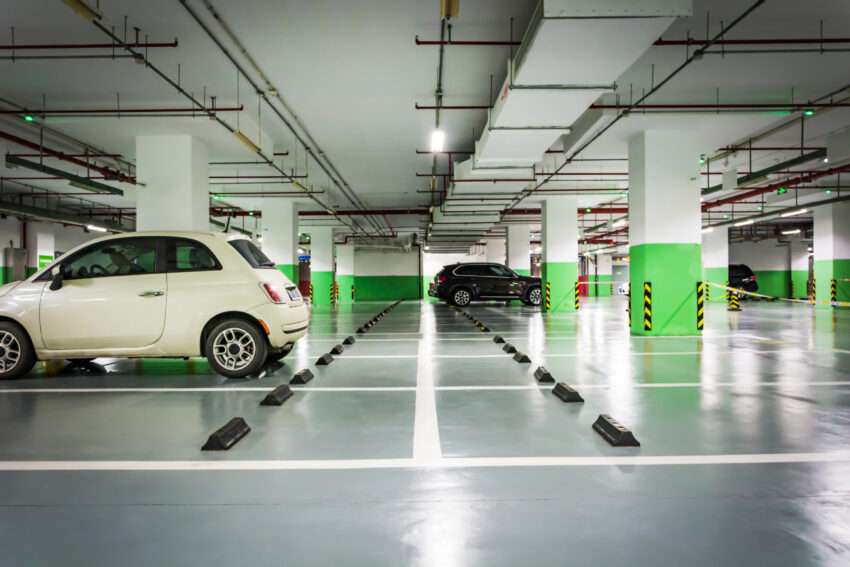
We tend to think of parking garages as indestructible. They are giant, gray monoliths of steel and stone, built to hold thousands of tons of vehicles. In the hierarchy of building maintenance, they usually fall to the bottom of the list. We worry about the lobby renovation, the HVAC system in the tenant suites, or the roof leaks on the penthouse level. The garage? It’s just concrete. It can take care of itself.
But ask any structural engineer, and they will tell you a different story. A parking garage is actually a dynamic structure living in a hostile environment. Unlike the rest of your building, it is not climate-controlled. It is exposed to freezing winters, scorching summers, driving rain, and the constant vibration of moving cars.
If you ignore the early warning signs, a garage can become a financial sinkhole—or worse, a liability hazard. Scheduling a routine engineering consult isn’t just about checking a box for the insurance company; it’s about catching the invisible cancer that eats reinforced concrete from the inside out.
Here are the specific failures that engineers look for when they walk your deck, and why they matter.
1. Spalling and Delamination
The most common and destructive issue in any garage is spalling. To understand spalling, you have to understand how a garage is built. It is a sandwich of concrete and steel rebar. Concrete has high compression strength (it holds weight well), but low tensile strength (it snaps easily). Steel rebar provides the tensile strength.
The problem starts when water, specifically water carrying road salts or de-icing chemicals, seeps into the microscopic pores of the concrete. When that salty water hits the steel rebar, the steel rusts. Here is the physics trap: Rust occupies up to seven times more volume than the original steel. As the rebar rusts, it expands. This expansion creates massive internal pressure—up to 5,000 psi—pushing outward against the concrete. eventually, the concrete can’t hold it, and a chunk pops off. This is spalling. If you see a pothole in your deck where you can see exposed, rusty wire, that is a structural wound. It means the “skeleton” of your building is corroding.
2. The Failed Expansion Joint
Garages are designed to move. Concrete expands in the heat and contracts in the cold. To prevent the whole building from cracking apart during these thermal cycles, engineers install expansion joints—gaps between the concrete slabs filled with a flexible, rubberized seal (a gland).
These joints are the cartilage of the structure. However, they are also the first thing to fail. The rubber dries out, tears from the incessant thump-thump of tires rolling over it, or gets packed with debris. Once a joint fails, it becomes a funnel. Water from the top deck pours through the gap onto the cars parked on the level below. If you have tenants complaining that “lime water” or “white stalactites” are dripping onto the hood of their vehicles, you have a failed expansion joint. That white liquid is dissolved minerals from the concrete, and it is highly acidic to car paint.
3. Vertical Cracking vs. Shear Cracking
Not all cracks are created equal. When an engineer walks into a garage, they are reading the cracks like a map.
- Shrinkage Cracks: These are usually hairline cracks that happen when the concrete cures (dries) during construction. They are often shallow and cosmetic.
- Shear Cracks: These are the scary ones. A shear crack usually runs diagonally (at a 45-degree angle) near a column or a beam support.
A shear crack indicates that the structure is struggling to hold the load. It suggests that the weight of the slab is trying to “slide” past the support column. If you see diagonal cracking appearing on your support beams, this is an immediate red flag that requires a structural evaluation. It’s not a “patch it later” problem; it’s a life-safety issue.
4. The Drainage Disaster
Water is the enemy. The entire design of a parking deck is based on the premise that water will flow off of it. Engineers design decks with a slight slope (usually 1-2%) to guide water toward the drains. Over time, buildings settle, and sometimes, they settle unevenly. This can reverse the slope, causing standing pools of water.
Standing water is a catalyst for deterioration.
- It acts as a reservoir for the salty water we mentioned earlier, giving it more time to soak into the slab.
- In the winter, that pool freezes. Water expands when it freezes. This freeze-thaw cycle acts like a jackhammer on the surface of the concrete, scaling off the top layer and creating a rough, gravelly surface. If your drains are at the highest point of the puddle, the design has failed, and you will likely need to install supplemental drains or resurface the deck to correct the pitch.
5. The Double-Tee Stem Failure
Many precast garages are built using double-tee beams—giant concrete slabs that look like two Ts side by side. The stems (the vertical part of the T) hang down and rest on ledges called corbels. Because these connection points bear the entire weight of the floor, they are high-stress zones. Engineers often find cracking or crushing at the bearing pads where the double-tee rests on the main structure. Since these connections are often hidden high up in the ceiling of the level below, they are easily missed by maintenance staff but are critical for structural integrity.
Maintenance is Cheaper than Repair
The tragedy of parking garage maintenance is that it is almost always reactive. An owner sees a leak and calls a guy to inject some epoxy. They see a rusty spot and paint over it. These are band-aids on a broken bone.
A proper engineering assessment gives you a capital prioritization plan. It tells you, “Fix the expansion joint on Level 3 this year ($20k), so you don’t have to replace the entire slab on Level 2 next year ($200k).” Your garage is a living asset. It breathes, it moves, and it ages. Treating it with the same respect you treat your lobby ensures that it remains an asset, rather than becoming a liability.
